
For some properties.
Co-living, HMO and share house property in Perth, assessed honestly.
Renting by the room earns considerably more than a standard tenancy, in a house that suits it. Most houses do not. Eight questions and you will know which one yours is. We manage co-living within 15km of Padbury only.
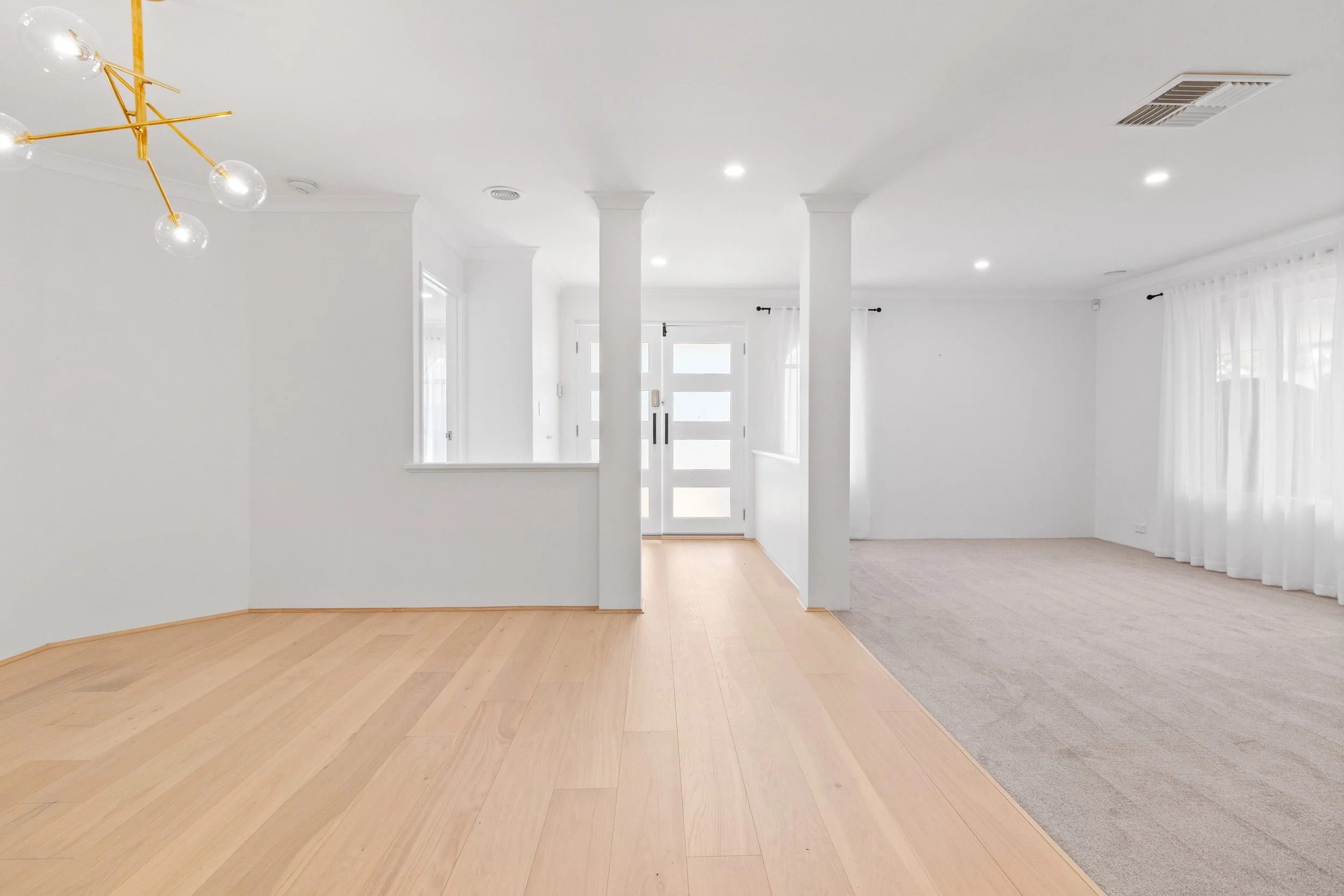
Co-living is sold as a yield strategy. It is really a property strategy.
The house decides whether it works. Not the spreadsheet.
Does your property actually suit it?
Eight questions on layout, location, bathrooms and occupancy. Instant result, no email required, and it will tell you no if the answer is no.
Count current bedrooms, but include realistic conversions. A theatre, a large study or an unused formal lounge can often become a bedroom. Any conversion needs a building permit and may need council approval, so treat this as potential rather than certainty.
Below five rooms, the extra income rarely covers the extra work once management, turnover, inter-let vacancy and landlord-paid utilities come out. At six it usually does. That gap between five and six rooms is bigger than most owners expect.
Privacy is the single biggest driver of room rent. Ensuite rooms in Perth indicatively achieve $350 to $450 a week against $250 to $350 for a shared bathroom. Adding an ensuite or converting a laundry often pays for itself faster than adding a room.
Two reasons this matters. Room demand follows transport and employment, and it is far more location-sensitive than whole-house demand. And co-living needs a manager who can be at the property at short notice, which is why we only take it on within 15km of Padbury.
Within 15km of Padbury. Joondalup, Hillarys, Sorrento, Duncraig, Kingsley, Woodvale, Greenwood, Warwick, Craigie, Beldon, Heathridge, Ocean Reef, Mullaloo, Currambine, Kinross, Connolly, Edgewater, Wanneroo, Tapping, Carramar, Banksia Grove, Clarkson, Ballajura, Balcatta, Stirling, Karrinyup and Scarborough. Outside that, the assessment still works and you will still get an honest answer. We just will not be the ones managing it.
What the property earns now on a standard whole-house tenancy, or what you would expect it to earn. This is what co-living has to beat, after costs. Perth median house rent was $750 a week as at August 2026, with units at $700.
Six adults sharing one kitchen is where co-living households succeed or fall apart. Generous open-plan living, a large kitchen and somewhere to sit outside do more for retention than anything else in the property.
Parking is the most common council objection to a lodging style use, and the most common neighbour complaint. Some local governments want close to one bay per occupant.
Motivation changes the answer. Co-living solves a cash flow gap well. It solves boredom badly.
Six agreements instead of one. Two or three changeovers per room per year instead of one every couple of years. Furnishing at $10,000 to $20,000. Utilities in your name. Household dynamics that need managing, not ignoring.
What the numbers look like
Indicative only. Built on Perth room rate midpoints of $400 a week for an ensuite room and $300 for a shared bathroom room, 92 per cent occupancy, an allowance for management and letting, an allowance for landlord-paid utilities and internet, and your current rent as the baseline. It does not include furnishing, conversion works, higher insurance or council registration costs. Actual income depends on suburb, condition, furnishing, demand and the market at the time of letting. These are not projections, forecasts or guarantees. Do not make an investment decision on them. Management costs vary by property, see the fee calculator.
Where your property stands
Want the answer for your actual property?
A free co-living assessment. I look at the real layout, the suburb, the bathroom configuration and the council position, and tell you whether it is worth doing. Sometimes the answer is no, and you will get that answer too.
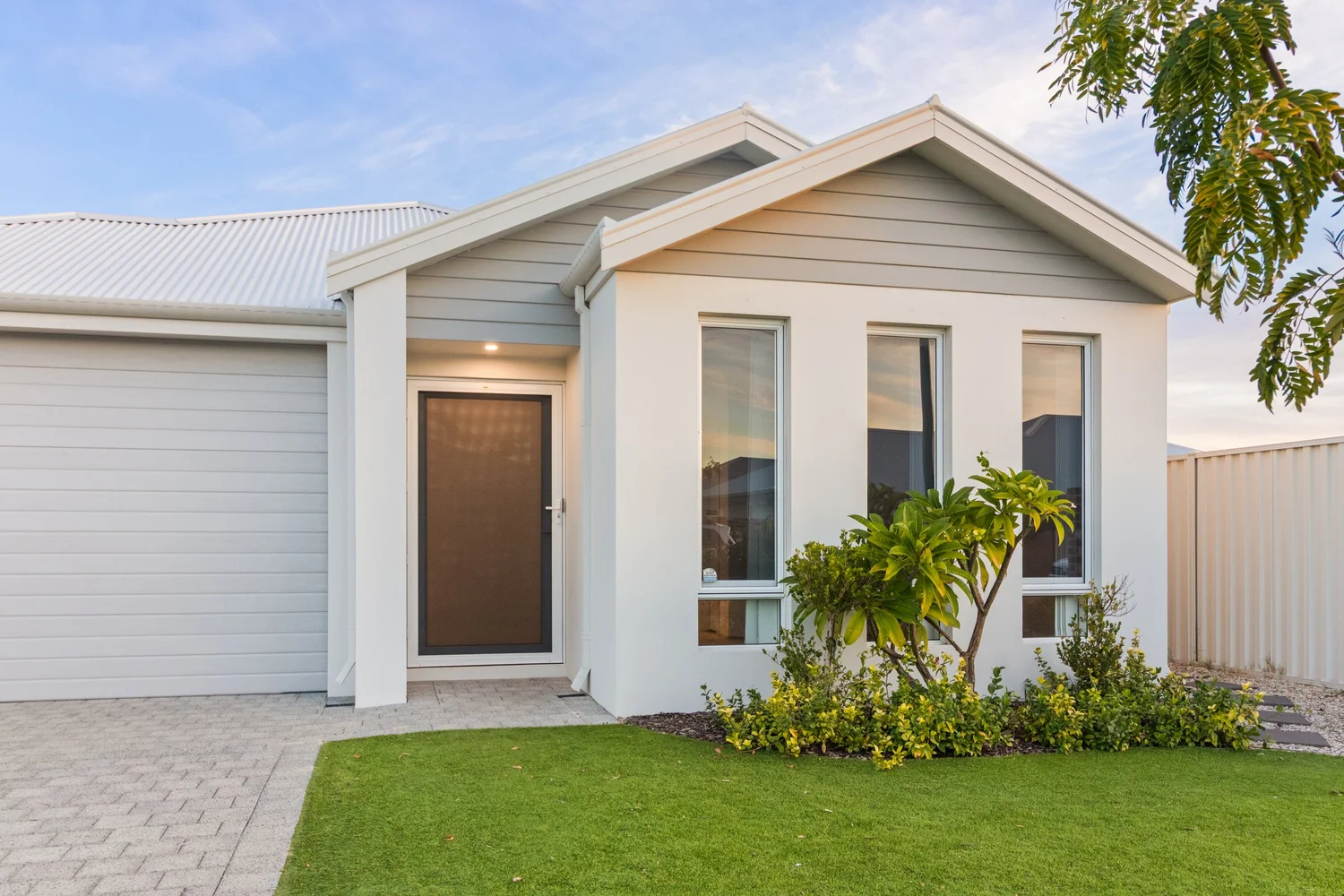
What co-living actually is.
Co-living, HMO, share house, rent by the room. Different words for one arrangement: each room is let to a separate occupant on its own agreement, and the kitchen, living areas and often the bathrooms are shared.
The income comes from the fact that six people will pay more for six rooms than one household will pay for one house. The cost comes from everything that follows.
- Six agreements, not one. Six sets of screening, six move-ins, six ledgers.
- Turnover is constant. Two to three changeovers per room per year is normal.
- The household is the product. One badly matched occupant can empty the other five rooms.
- Utilities are usually yours. Power, water and internet in the owner's name is standard.
Five things decide it. Everything else is detail.
Owners tend to arrive with a spreadsheet. The spreadsheet is almost never the problem. The house is.
If a property fails on room count or bathrooms, no amount of good management makes the numbers work.
-
Rentable rooms
Six is where it works. Five is marginal. Four or fewer and the uplift is eaten by management, vacancy between lets, utilities and furnishing. Conversions can get you there, but they need a building permit and habitable room requirements apply: ventilation, natural light, minimum dimensions and egress.
-
Bathrooms, and how many are ensuites
The gap between an ensuite room and a shared bathroom room is around $100 a week in Perth. Across six rooms, over a year, that is the difference between a good decision and a busy one. One bathroom serving five or six adults is not viable regardless of the rent on paper.
-
Occupant count, not room count
Under the Health (Miscellaneous Provisions) Act 1911 (WA), premises where six or more unrelated people lodge are generally classified as a lodging house and require registration. The threshold counts people. A six room house with one couple in it is already at seven. Some councils apply lower thresholds and requirements vary by local government area.
-
Which framework the agreements sit under
Room by room arrangements can fall outside the Residential Tenancies Act 1987 (WA) and operate as lodging arrangements instead. The position is not settled in all respects and depends on how the agreement is structured. This is the part owners most often get wrong on their own, and it is the part that matters when someone will not leave.
-
Whether the household holds together
This is the one nobody models. Rooms are let to individuals, but they live as a group. Screening for compatibility matters as much as screening for income, and a household that breaks down empties several rooms at once rather than one.
A real Perth property, not a projection.
A six bedroom home in Tapping, about 12km from Padbury and well inside the area we manage co-living in, under our management since 2025. Six rooms, each let individually. The rooms are named rather than numbered, which sounds like a small thing and is not.
A worked example from one property under management, not a projection. The gross difference is before management, inter-let vacancy, landlord-paid utilities and furnishing, all of which are real and all of which reduce it. Outcomes vary by layout, council area, occupancy and tenant mix. Seek independent financial advice.

What goes wrong, when it goes wrong.
The failures are predictable and they are almost never about the rent. They are about the paperwork, the council, the insurer or the household.
- The council was never asked. Registration is found out about after a neighbour complains, not before.
- The insurer was never told. A standard landlord policy written for one tenancy may not respond to a lodging arrangement.
- The agreements were downloaded. The wrong framework, discovered when someone refuses to leave.
- The strata by-laws said no. Occupancy and parking restrictions that were never checked.
- Five rooms, not six. The numbers were done on gross and the net never arrived.
Owners usually arrive in one of these moments.
If we do manage it, here is the line.
Co-living management is a different job to standard management, and it is worth being clear about where it stops. We take it on within 15km of Padbury only. Standard management runs across the full Perth metro.
- Individual agreements, one per room
- Screening for compatibility as well as affordability
- Room by room marketing and changeovers
- Household management and disputes between occupants
- Compliance calendar, inspections and condition records
- Confirming the regulatory position with your council before we start
- Coordinating independent trades and cleaners, engaged by you
- Furnishing the rooms and shared areas
- Any conversion or building work, and the permits for it
- Council registration fees and any planning application
- Utilities and internet accounts in your name
- Arranging insurance written for the actual use
- Deciding whether the risk profile suits you
Frequently asked questions.
Still not sure?
Send me the address and I will look at the layout, the suburb and the council position, and tell you whether it is worth doing. No obligation, and no is a perfectly good answer.
Important information
This page and the assessment on it provide general information only. They do not constitute financial advice, investment advice, legal advice, taxation advice or building advice. Local Property Partners is a licensed real estate agency, not a licensed financial adviser. Income figures shown are indicative only, based on Perth market observations current at August 2026, and are not projections, forecasts or guarantees of future returns. Past results do not indicate future performance. Do not make a financial or investment decision on the basis of this tool. Seek independent advice from a qualified financial adviser, accountant or lawyer.
Co-living and room by room arrangements in Western Australia may operate under lodging agreements rather than the Residential Tenancies Act 1987 (WA), and the legal framework for lodging arrangements is not settled in all respects. Premises where six or more unrelated persons lodge are generally classified as a lodging house under the Health (Miscellaneous Provisions) Act 1911 (WA) and may require council registration, planning approval and compliance with the Building Code of Australia. The threshold is based on the number of persons lodging, not the number of rooms. Some councils apply lower thresholds. Requirements vary by local government area and change over time.
Any conversion, renovation or change of use may require a building permit under the Building Act 2011 (WA) and must comply with the Building Code of Australia, including requirements for habitable rooms covering ventilation, natural light, minimum dimensions and emergency egress. Strata by-laws may restrict occupancy, parking or the use of a lot. Standard landlord insurance may not respond to a room by room or lodging arrangement. Always confirm the current position for your specific property and occupancy level with your local council, your strata company and your insurer before proceeding.
Co-living management is offered within a 15 kilometre radius of Padbury, Western Australia. Suburb lists on this page are indicative of that radius and are not a guarantee that a particular address falls inside it. Standard residential property management is available across the full Perth metropolitan area. Local Property Partners does not provide cleaning, gardening or trade services directly. Where those services are coordinated, the trades are independent businesses engaged by the owner and invoicing the owner directly. Local Property Partners. Licence No. RA85442. ABN 48 582 232 398. Director and Licensee, Daria Tedling.