
What maintenance should you actually be doing?
Tell us about the property and we will build the schedule: quarterly through to twenty year replacements, what you can do yourself, what needs a licensed trade, and what is legally required in WA.
Takes about a minute. No sign-up, the schedule appears on screen and you can print it.
Deferred maintenance is the most expensive kind.
Nothing on a maintenance schedule feels urgent, which is exactly the problem. Every item on it is cheap while it is scheduled and expensive once it fails.
A $200 job becomes a $4,000 one
A blocked gutter is a morning's work. A blocked gutter through one wet Perth winter is water in the eaves, damaged ceilings and a repaint. The failure mode is almost always slow, invisible and then sudden.
Maintenance drives retention
Tenants who see things fixed properly report problems early and stay longer. Tenants who have learned that reporting achieves nothing stop reporting, and you find out at the outgoing inspection.
Insurers ask what you did
Where damage traces back to a maintenance item that was left, a claim gets harder. A record of scheduled work and dated invoices is what turns an argument into a payment.
It is not optional in WA
A lessor must keep the premises in a reasonable state of repair having regard to their age and character. Some items, including smoke alarms, RCDs and pool barriers, carry their own penalties.
Repairs are generally deductible
Repairs and maintenance on an income producing property are usually deductible in the year incurred, while improvements are capitalised and depreciated. Worth knowing before you decide between patching and replacing.
It shows up at sale
A building inspection at sale finds everything deferred, all at once, and at the worst possible moment for negotiating. Maintenance spent evenly costs less than maintenance spent under pressure.
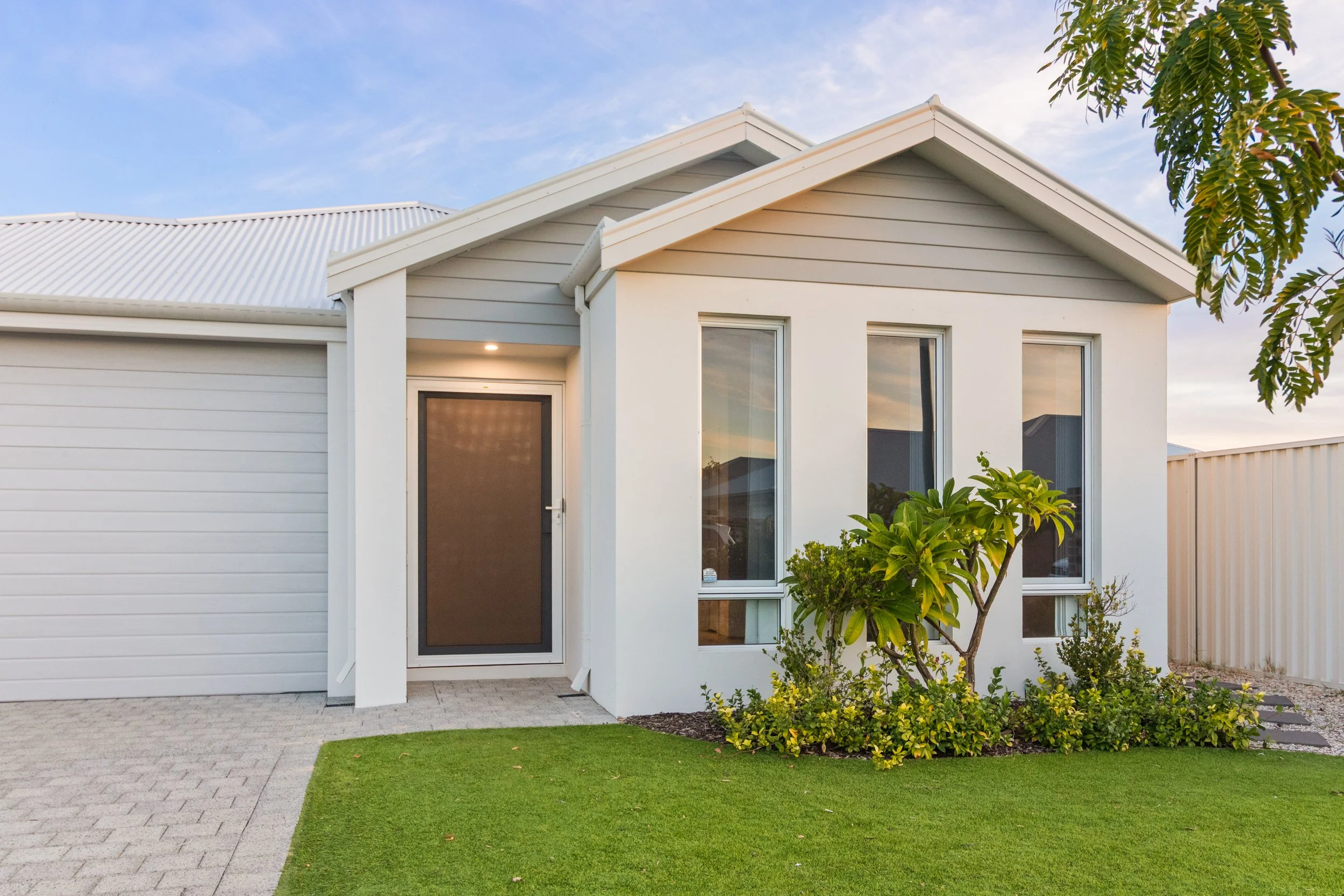
Most of what protects a property happens on a schedule, not in an emergency.
Four things that catch out-of-state owners.
| What | The rule | Why it matters |
|---|---|---|
| Winter sprinkler switch off | 1 June to 31 Aug | No sprinklers at all in Perth and Mandurah, on scheme or bore water, with a $100 fine for a breach. A handheld hose is still allowed. Outside that window, two rostered days a week based on your street number, before 9am or after 6pm |
| Pool and spa barriers | Every 4 years | Local governments must inspect private barriers at least once every four years. Required wherever water is deeper than 30cm, including portable pools. You need to arrange access, which in a tenanted property means coordinating with your tenant |
| Smoke alarms | Replace at 10 years | Ten years from the date of manufacture printed on the unit, not from installation, and regardless of whether it still beeps. Must be mains powered and compliant with AS 3786 in a rental |
| Termites | Annually | Perth sits in a termite active zone and most policies exclude termite damage entirely. An annual inspection is the cheapest insurance available on a timber framed home |
Sprinkler information from Water Corporation, pool barrier requirements from the Building Regulations 2012 and Building and Energy guidance, checked August 2026.
You cannot simply turn up to do maintenance. Access requires the correct written notice and, for non-urgent work, agreement on timing. In practice this is the main reason owner-arranged maintenance stalls, and the main argument for having it coordinated by whoever manages the property.
Maintenance, answered plainly.
Other free tools worth a look.
Property health check
Eighteen questions across finances, tenancy, compliance, property care and management, with a prioritised action plan.
Run the check Free toolRent review calculator
Check your rent against benchmarks and work out the earliest date you can lawfully increase it.
Check my rent HubLandlord Control Center
Book trades, request quotes, order compliance checks and browse current partner specials in one place.
Browse servicesWe diarise all of this against the property.
Every compliance item, every service interval and every inspection sits on a calendar attached to the property rather than to anyone's memory, so nothing lapses when workloads shift or managers change.
This tool provides general guidance for Western Australian property owners. It is not a building inspection, a compliance audit, or legal, tax or financial advice, and it does not replace advice from a licensed trade or a registered building inspector for your specific property.
All dollar figures are indicative ranges for the Perth market at the time of publication, intended to help with budgeting rather than to quote work. Actual costs vary considerably with access, scope, materials, property size and trade availability. Always obtain written quotes before authorising work.
Service intervals and replacement lifespans are typical ranges. Actual life depends on quality, installation, usage, exposure and climate, and manufacturer guidance for your specific equipment takes precedence. Coastal adjustments applied by this tool are a general allowance, not a measurement.
Compliance items are summarised as at August 2026. Smoke alarm and RCD requirements sit under the Building Regulations 2012 and Electricity Regulations 1947. Pool and spa barrier requirements sit under the Building Regulations 2012 and AS 1926.1-2012, with local government inspections at least every four years. Sprinkler restrictions are administered by Water Corporation and DWER. Requirements vary by property type, age and local government area, and this is not an exhaustive statement of your obligations.
Where a property is tenanted, access for maintenance requires the notice and agreement set out in the Residential Tenancies Act 1987 (WA). Responsibility for particular items as between lessor and tenant depends on the Act and on your tenancy agreement. Repairs and improvements are treated differently for tax purposes, so speak with a registered tax agent.
Nothing you enter is transmitted unless you request the schedule by email. Local Property Partners. Registered Agent RA85442. ABN 48 582 232 398.